
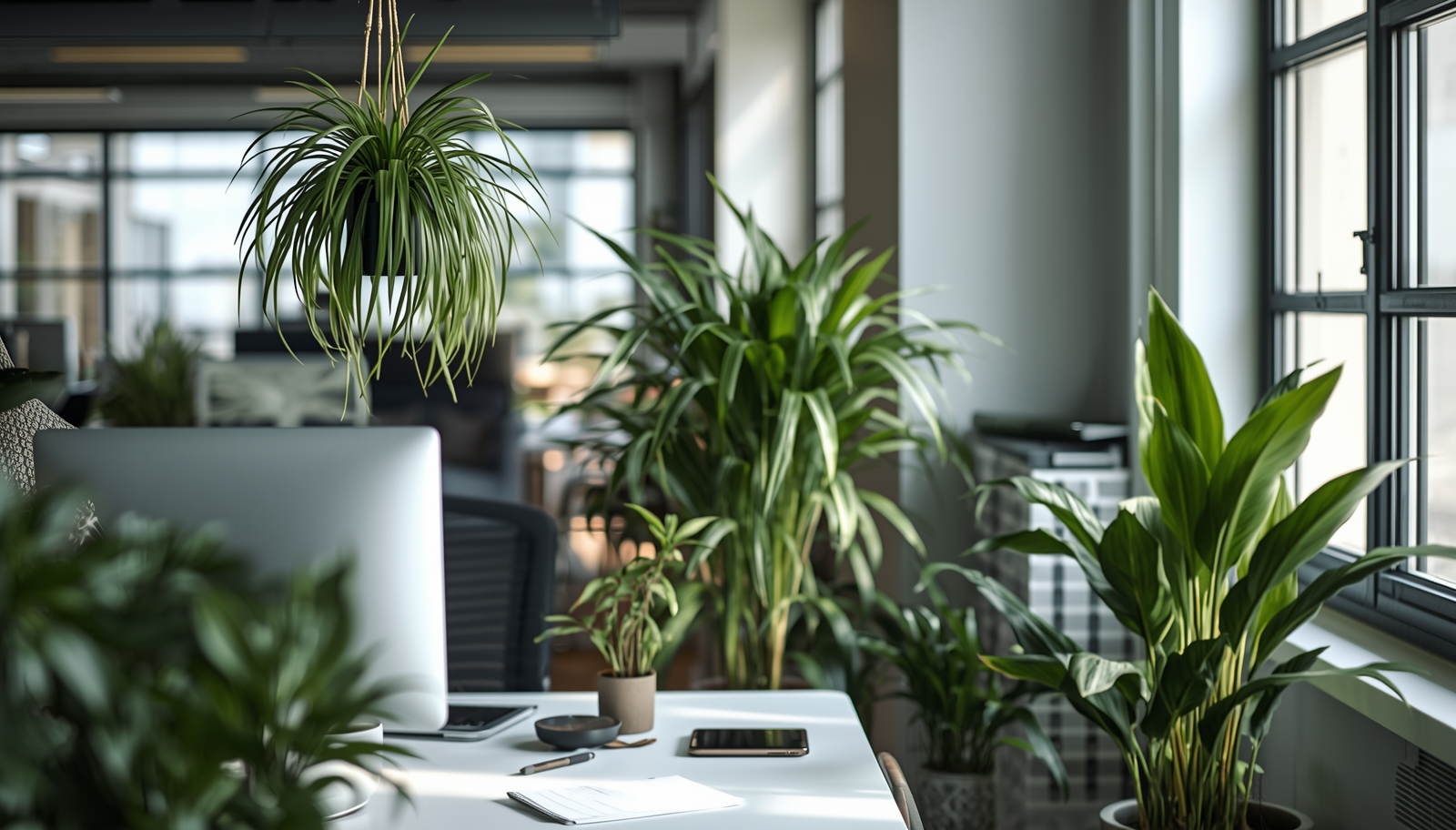
Indoor plants exist in homes, offices, and closed spaces. Air inside closed spaces contains particles from cooking, cleaning, materials, and outside air entry. Human breathing depends on air conditions in these spaces.
Plants interact with air through gas exchange. Leaves absorb carbon dioxide and release oxygen. Soil and roots interact with microbes. These processes connect plants with indoor air systems.
This article explains indoor plants used in homes and workspaces, their role in air systems, and methods of use for daily life.
Air Systems in Indoor Space
Indoor air contains carbon dioxide, dust particles, moisture, and chemical compounds. Sources include furniture, paint, cleaning products, and human activity.
Air movement occurs through ventilation, windows, and mechanical systems. Plants exist within this system and interact through leaf surface and root zone.
Snake Plant
Snake plant appears in homes and offices. It performs gas exchange during day and night cycles.
Use in Indoor Space
- Place in bedroom
- Place in office room
- Keep near window
Aloe Plant
Aloe plant exists in pots in indoor space. Leaves contain gel used in skin contact.
Use in Indoor Space
- Place near light source
- Water at intervals
- Use leaf gel for skin contact
Spider Plant
Spider plant grows in hanging pots. Leaves extend outward from central point.
Use in Indoor Space
- Hang near ceiling
- Place near window
Peace Lily
Peace lily exists in indoor containers. It produces white flower structure.
Use in Indoor Space
- Place in living room
- Place in office desk area
Areca Palm
Areca palm grows in clusters of stems and leaves. It occupies floor space in rooms.
Use in Indoor Space
- Place in corner area
- Water at regular intervals
Boston Fern
Boston fern produces many small leaf structures. It grows in humidity conditions.
Use in Indoor Space
- Place in bathroom
- Place in kitchen area
Rubber Plant
Rubber plant has large leaves and thick stem structure. It grows in containers.
Use in Indoor Space
- Place near light source
- Keep soil moist
Bamboo Plant
Bamboo plant grows in water or soil containers. Stems grow vertically.
Use in Indoor Space
- Place in entry area
- Place on desk
English Ivy
English ivy grows with trailing stems. It climbs surfaces or hangs.
Use in Indoor Space
- Place in hanging container
- Place near wall support
Plant Interaction With Air Particles
Plants interact with air through leaf surface exchange. Water evaporation occurs from leaves. Soil supports microbial activity.
Air movement passes through plant structures in indoor space.
Placement of Plants in Indoor Space
Placement depends on light source, water access, and space structure.
- Bedroom: snake plant, aloe plant
- Living room: peace lily, rubber plant
- Bathroom: fern
- Office: spider plant, bamboo
Maintenance Process
Plant maintenance includes water supply, soil condition, and light exposure.
- Water supply at intervals
- Soil observation
- Light exposure from windows
Indoor Air Cycle
Indoor air cycles through ventilation systems, windows, and door movement. Plants exist within this cycle and participate in gas exchange.
Carbon dioxide enters leaves. Oxygen exits leaves. Water vapor exits through transpiration.
Health Connection
Human body depends on oxygen intake. Indoor plants contribute to oxygen presence in closed space. Human respiration interacts with room air.
Safety Consideration
Some indoor plants contain compounds not suitable for ingestion. Placement should avoid contact with children and animals.
Plant Selection for Indoor Space
Selection depends on light level, humidity, and maintenance capacity.
- Low light: snake plant
- Medium light: spider plant
- High light: rubber plant
Indoor Plant Grouping
Plants can exist in groups in indoor space.
- Corner group
- Window group
- Desk group
Conclusion
Indoor plants exist in human spaces and interact with air systems. Snake plant, aloe plant, spider plant, peace lily, areca palm, fern, rubber plant, bamboo, and ivy exist in indoor environments.
These plants participate in gas exchange, water cycle, and air movement. Placement and maintenance support plant function in indoor space.
Indoor plant systems form part of living environments and air interaction processes.